If You Send Your Bag to Hermès For Service and They Think It’s Fake, They Keep It and Destroy It
If You Send Your Bag to Hermès For Service and They Think It’s Fake, They Keep It and Destroy It: An FYI, a weird French law, and a cautionary tale from on
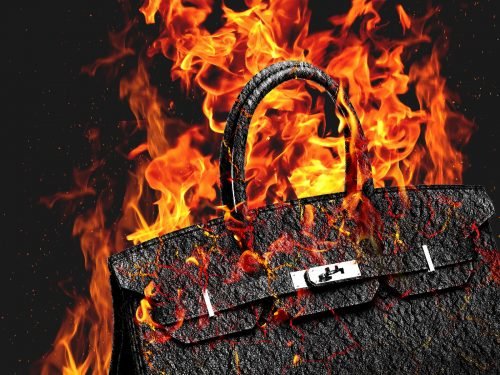
An FYI, a weird French law, and a cautionary tale from one of our forum members
An FYI, a strange French legal reality, and a cautionary tale from one of our forum members
35 Comments
Oct 22, 2018
I said goodbye on Friday, but I’m back from the dead for one more post that I just couldn’t leave without writing. (Hey, it’s almost Halloween, after all!) It involves a bunch of the most things about this weird industry: the cult of Hermès, the wild secondary designer bag market, Europe’s cultural attitude toward their luxury brands, and “authenticity” as a concept. It’s also a cautionary tale about all of these things, and about how one of our PurseForum members may now be out thousands of dollars.
The Hermès Spa
Amanda Mull
Another thing Hermès has is a thriving secondary market. Because the brand’s bags wear well, are mostly classics, and are generally pretty hard to get your hands on, they retain their value better than other brands, and their value is the highest of any major luxury leather house. As you might imagine, there are also a lot of fake bags floating around the internet, and because of the high interest in used Hermès and the high financial risk of buying one of the brand’s bags from a third party, there is an entire economy of resellers and authenticators devoted to weeding out even the best fake bags. That system goes all the way up to major auction houses and the authenticators they contract with; those authenticators can also be hired by buyers to evaluate a potential purchase before it’s made, and they can be hired by resellers to certify their bags before they’re listed for sale. Hermès won’t authenticate bags on request, so this mini economy of secondary market workers has sprung up to mitigate as much financial risk as possible for all involved.
As you can imagine, this doesn’t always work out!
Which brings us to one of our tPF members, SupaUltra_J, who started a thread on the forum at the beginning of October to get advice on a problem she was having with the Hermès Spa. You can read the thread in full, but the gist is as follows: SUJ recently bought a rare Hermès Kelly Sellier Mou from a very reputable Hermès reseller she does not name in the thread, but whom she’s done business with as both a buyer and seller in the past. Before buying the bag, she sent photos to a tPF member who goes by bababebi, who’s an independent Hermès authenticator, considered the gold-standard in third party authentication worldwide. She’s been authenticating professionally online since 2011, and in that time, she’s given a verdict on over 12,000 bags and worked with some of the world’s biggest auction houses. Bababebi is also a longtime Hermès client who owns scores of the brand’s bags herself, including two versions of the rare Kelly Sellier Mou in question. If anyone would know whether or not it was authentic, it’s her.
35 Comments
Because of tough European laws designed to protect the continent’s luxury brands, it’s not only perfectly legal for a brand to confiscate a client’s bag if they deem it fake, but it’s required. Sending the bag back to her would be considered exporting counterfeit goods, and even if she traveled to Paris, she would be in violation of French law by taking possession of the fake bag. Hermès has the last word, even though our members have come forward with documented cases in which Hermès has been mistaken about a bag’s authenticity in the past. In most of those, thankfully, the decision was eventually reversed and the bag was serviced and returned.
Naturally, SUJ has appealed this decision, and while the first round of appeals did not go her way, she’s waiting on an affidavit from Hermès that may shed more light on the situation. Luxury brands generally don’t tell clients why they believe a bag to be inauthentic, though, because that would aid counterfeit manufacturers in making their bags even harder for shoppers to detect.
The rarity of the bag also makes it very unlikely that such a high-quality fake was ever made
The rarity of the bag also makes it very unlikely that such a high-quality fake was ever made
Oct 22, 2018
The rarity of the bag also makes it very unlikely (although not impossible) that such a high-quality fake was ever made. Few people know of the Mou outside hardcore Hermès lovers, and the vast majority of counterfeiters make their money by selling so-so fake bags at higher volumes, which usually target people who are new to a brand or type of bag and have no idea what to look for, or who might not know they need to watch out for fakes in the first place. Those people are generally looking for the most popular styles and colors, not a deep cut like this design. And although superfakes exist, they are usually made to mirror the most expensive exotic bags, because tricking someone into spending $25,000 provides the kinds of high margin and high shopper interest that making a near-identical fake would require in order to be worth the time and effort. After all, a big part of why Hermès bags cost as much as they do is that it takes a lot of time, skill, and fine materials in order to make one.
So that’s where we are now: It seems unlikely that the authenticator and the Hermès authenticator community are wrong, but it also seems unlikely that Hermès is wrong. SUJ, to her credit, is taking this all with a level of calm I’m not sure I could muster if a bag for which I paid thousands of dollars might get set on fire. The reseller who sourced the bag is also being cooperative and is in contact with the original owner, who they say is working on providing a paper trail that would prove the bag was purchased from Hermès. For the moment, though, the brand holds all the cards, and all anyone can do is sit and wait.
It’s easy to scold people for buying bags from resellers or for trusting authenticators, but because rarity goes hand in hand with luxury, the secondary market is a part of the bag business that is only going to grow as brands employ marketing tactics like “drop” sale structures and limited editions. Those practices make it difficult for shoppers to get what they want directly from the brand to give buying a sense of importance and immediacy—if you don’t grab what you want, it will be gone for good. The way the luxury industry is evolving incentivizes people to flip popular, valuable pieces, and old school luxury brands like Hermès generally don’t want to admit the phenomenon exists at all. That disconnect puts all buyers, authenticators and sellers working in good faith in exactly the bind SUJ has encountered, and I can’t imagine these brands can go much further without doing something to address these problems in some substantive way.
I said goodbye on Friday, but I’m back for one more post I couldn’t quite leave unwritten. It feels fitting for the season, because this one is part industry watch, part horror story, and part lesson in how complicated the luxury bag world has become. It touches on the near-mythic status of Hermès, the volatility of the secondary market, Europe’s protective stance toward luxury brands, and the slippery question of what “authentic” really means when so much money is at stake.
Wow, reading this after reading a thread on the Hermes forum last week of someone buying 3 little leather bag charms, finding out later that one of the wrapped boxes was empty, and going through a lot of back and forth (including getting her local Hermes shop involved) before Hermes broke down and sent her another one. Apparently, Hermes is NEVER wrong, or at least that’s what they tell themselves and expect others to believe.
I get the principal behind it. However, it really sucks for the buyer who wants an Hermes bag and buys it pre loved from what they think is a reputable second hand site. They are still out thousands of dollars. Why not send it back to the buyer and give them a chance to return it and re coop their money? A lot of these second hand sites are 100%guaranteed or your money back. What better proof of counterfeit than certification from Hermes? No way to treat your brand fans to be sure!
First, a little context. Hermès bags are designed to last for years, even decades, with proper care, which is why the brand offers an after-sales service often referred to as Hermès Spa. Customers can bring their bags to a boutique, where the item may be sent to Paris for inspection, cleaning, repair, or refurbishment by the brand’s own artisans before being returned.
I don’t understand how Hermes is unable to authenticate its own goods? If each bag is handmade as they claim and has a code/stamp to verify its authenticity, why have they mistakenly deemed some of their own bags counterfeit when they were not? If I’m paying x amount of dollars on the secondary market for one of their bags, the least Hermes could do is properly authenticate its own creation.
Hermès doesn’t give a crap about people who buy on the secondary market. To them, you’re not an Hermès client.
I’m just wondering: SupaUltra_J sent photos to bababebi before purchasing the bag. Is she absolutely, positively sure that she received the bag that was in the photos?
That service comes with a major caveat: Hermès generally will not work on bags that show evidence of outside repairs or alterations. For devoted owners, that makes the Spa both valuable and nerve-racking. Choosing an independent repair can preserve a bag in the short term, but it can also eliminate the possibility of future brand service.
This is true in France. The laws against replicas are very strong. It is against the law to sell, buy or own a fake. The law says the replica must be destroyed, and it is true even if you do not know it is a fake and sincerely think you bought an original bag.
I would love to know the end result of the authentication process. please let us know!!!
Lol nice to see you rise from the dead and treat us to a great article. This makes me hate Hermes more, particularly how they deny repairs if past work has been done by another independent service. Reminds me of Iphone’s insular ecosystem. I can’t quite believe the laws on counterfeit confiscation either, it’s bad enough that it might be fake. I feel for you SupaUltra_J.
Hermès also sits at the center of a substantial resale market. Its bags hold value unusually well because they are classic, durable, and often difficult to buy directly. That combination has helped create an entire ecosystem of resellers and authenticators. Buyers use them to reduce risk before purchasing; sellers use them to support listings after purchase; and even major auction houses rely on them. Hermès itself does not authenticate bags on request, which leaves the secondary market to manage the uncertainty as best it can.
“The reseller who sourced the bag is also being cooperative and is in contact with the original owner, who they say is working on providing a paper trail that would prove the bag was purchased from Hermès” The original owner will have a sales record with the Hermes date of sale, the SA information, and the total purchase price. It is incumbent on the original owner to provide authentication documentation to the “very reputable buyer and reseller.”
Now you sound like my home owners policy! After a recent leak from flat above me, they refused to pay for either my soaked Kelly or my Channels because I didn’t keep receipts. Then on my birkin for which I had receipt they paid as if it was a no name bag and not the VIP only Soo Black model. The value of the Soo Black makes it worth nearly as much as when Hermes offered to me and I bought it.
An Hermes craftsman spends 18+ hours on each bag from inception to completion and has access to all those trade secrets that are kept tight lipped. I’m sure Bababedi is very knowledgeable about Hermes, but I’m much more inclined to believe the craftsman that held the bag & deemed the bag inauthentic.
And, as you might expect, that system does not always work smoothly.
As between who knows better if the bag in question is a fake, I tend to side with Hermès institutional knowledge here but I hope that they are wrong for SupaUltra_J’s sake. Does anyone know what happens if you send a bag to LV or Chanel or any other designer brand for repair and they deem it to be a counterfeit? European anti-counterfeit laws are very tough so I wonder what would happen if this had happened in the US meaning would they just have returned the bag and refused to do the repair.
I had big problem with Chanel in San Francisco refusing a repair on a style only sold in Europe. They finally agreed to replace the zipper and apparently this is done in LA workshop. Frankly, repair was so horrible including zipper not right fitting that my local shoe repair could have done a better job!! Plus lost 4 months of using my favorite bag. So I am not a fan of brand in house spas. And yes, Chanel demands receipt too.
The Kelly Sellier Mou is a relatively uncommon variant produced only for a limited period, and because this particular bag had been pre-owned, SUJ later decided to send it to Hermès Spa for cleaning and touch-up work. After the bag arrived in Paris, she received a letter from Hermès stating that it had been deemed inauthentic and would not be returned. She was told she could appeal, but if the decision stood, the bag would be destroyed and no compensation would be offered.
Would you mind sharing which FB group you like? Thank you!
(HER) Reetzy Community & Marketplace
Wow, this is awful! But on a happier note, I have to say I enjoyed another nicely written story by the amazing Amanda. Are you sure you want to leave the PF? I hope you come back every now and then just to say hi!
That outcome reflects the strict legal framework surrounding counterfeit goods in parts of Europe. In France, a luxury brand may be required to confiscate a counterfeit item rather than return it, because sending it back could be treated as reintroducing counterfeit goods into circulation. Even if an owner believes the item was purchased in good faith, the legal protections for brands are strong. Hermès, in this case, has the final say.
I’m so glad you guys made an article about that. I’ve been following the thread since the OP posted and I’m so heartbroken. It is a lot of money lost.
Wow this sucks there is nothing worse than possibly being conned. Can the bag owner make a claim against the reseller if the bag is deemed inauthentic? I realise this is less than ideal. The counterfeiters must be getting amazingly good if it is getting this hard to authenticate bags. What is a possible solution could Hermes and other designers put a unique ultraviolet light stamp on a bag for example?
Personally I wouldn’t even want the bag back if I knew it was fake.
Naturally, SUJ appealed. The first round did not go in her favor, and she is now waiting on an affidavit from Hermès that may clarify the brand’s position. Luxury houses rarely explain in detail why they believe an item is fake, since that information could help counterfeiters refine their products.
Quelle horreur! I’m just shocked…How is it possible that there’s neither recourse to recover the thousands of dollars spent nor a resolution to return the bag to the reseller?!
Hermes doesn’t have a record for each artesian’s work? l am just thinking that the craftsman code is on the bag, they can simply go back to records and check if this craftsman ever made this bag (in this color, size and material) ?? just saying!
Omg. What a nightmare. I’d be crying myself to sleep every night. I have a tattoo that says “Trust No One” on my hand. I hope they resolve this without a bag having to be turned into ashes :l
This is where the story becomes especially difficult. On the forum, members with deep Hermès knowledge have overwhelmingly sided with bababebi. Nothing about the bag appears suspicious to them. At the same time, Hermès has been wrong before, which has led some readers to wonder whether the brand’s after-sales team is simply less familiar with a rare model that was made only for a short time.
10 grand floppy bag to hold stuffy-nose tissue. smfh.
Hermes is terrible I don’t know why people support them. It’s such a celebrity brand
Not just any celebrity, Kardashians. Yuck
The Mou is unusual within the Kelly family because it is softer and less structured than the standard version. Its name literally means “soft” in French, and its construction differs from the more familiar model. For someone who has not handled many examples of this specific bag, those differences could conceivably create confusion. Hermès says the appeal review was handled by senior staff, but the bag’s distinctive construction should, in theory, be recognizable to anyone familiar with the model.
Just out of curiosity. Did both agree on you writing an article? Bababebi and the bag owner?
Is there any update? I really hope it is all resolved now and that the bag has not been destroyed! Thank you to let us know.
At the same time, the bag’s rarity also makes an elaborate fake seem less likely. Counterfeiters usually focus on the most recognizable and commercially lucrative styles, especially the ones that attract inexperienced buyers. A niche Kelly variant that only the most dedicated Hermès fans would know is not the sort of item that typically drives mass-market counterfeiting. Superfakes do exist, but they are more often aimed at the most visible and highest-margin pieces.
You May Also Like
Featured
Matthieu Blazy’s Chanel Bags Shine Outside the Haute Couture Fall 2026 Show
The Best Bags Guests Carried to Dior’s Fall 2026 Couture Show
Are Handbags the Gateway to Luxury Ready-to-Wear?
So the situation remains frustratingly unresolved. The strongest independent Hermès experts appear convinced the bag is genuine, while Hermès itself appears equally convinced that it is not. SUJ, admirably, is handling the ordeal with remarkable composure. The reseller who sold the bag is cooperating and says they are in contact with the original owner, who is reportedly trying to provide documentation showing that the bag was purchased from Hermès. For now, though, the brand controls the outcome.
World Cup Players’ Best Bags: The Follow-Up Edit
Trending Now
Matthieu Blazy’s Chanel Bags Shine Outside the Haute Couture Fall 2026 Show
The Coveted Cartier Rainbow Love Bracelet Is Back
Jonathan Anderson Melds Sculptural Intricacies with the Delicacy of Nature for Dior Fall 2026 Haute Couture
The Best Bags Guests Carried to Dior’s Fall 2026 Couture Show
Goyard Just Introduced the Hobo Bohème Mini Bag
Amazon Summer Picks
Hohom
Summer Travel Mesh Tote Bag
The larger lesson is not simply “don’t buy secondhand” or “never trust an authenticator.” The luxury market has changed. Limited releases, controlled distribution, and artificial scarcity have made secondary sales more important than ever. When brands make direct purchase difficult, they also increase the value of the resale ecosystem and the risk that comes with it. Buyers, sellers, and authenticators acting in good faith can still end up trapped between a brand’s institutional authority and the reality of a very active secondary market.
Lip Glowy Balm
Sun Bum
Kids SPF 50 Clear Face Stick
That tension is unlikely to disappear on its own.
Flip Flops
Related Long-Tail Keywords
- replica if you send your to hermès for service and they think it’s fake, they keep it and destroy it quality guide
- how to style a replica if you send your to hermès for service and they think it’s fake, they keep it and destroy it bag
- replica if you send your to hermès for service and they think it’s fake, they keep it and destroy it material and hardware details
- replica if you send your to hermès for service and they think it’s fake, they keep it and destroy it size and fit guide
- replica if you send your to hermès for service and they think it’s fake, they keep it and destroy it buyer checklist

Interested in replica luxury bags? Contact us.
WhatsApp: +852 46220086 Telegram: @samchen99 Instagram: @repbags7Scan the QR code or contact us directly